A complete putting system for real golfers
When you step onto the green, the game changes completely. Most golfers never make that switch. This course is about making it, and keeping it.
The moment your ball lands on the green, everything changes. No more compression, spin, or power. Now it is slope, speed, and feel. Most golfers never make that switch. They carry the hitting mindset right onto the putting surface, and they wonder why they three-putt.
"Think about a biathlon. The athlete is skiing hard, then stops completely and shifts into precise, controlled shooting mode. Same sport. Completely different skill set. Golf is the same way. The green is your shooting range."
The fairway is the skiing. The green is the shooting range. And most golfers show up to the shooting range still in ski mode. That one shift is where lower scores start.
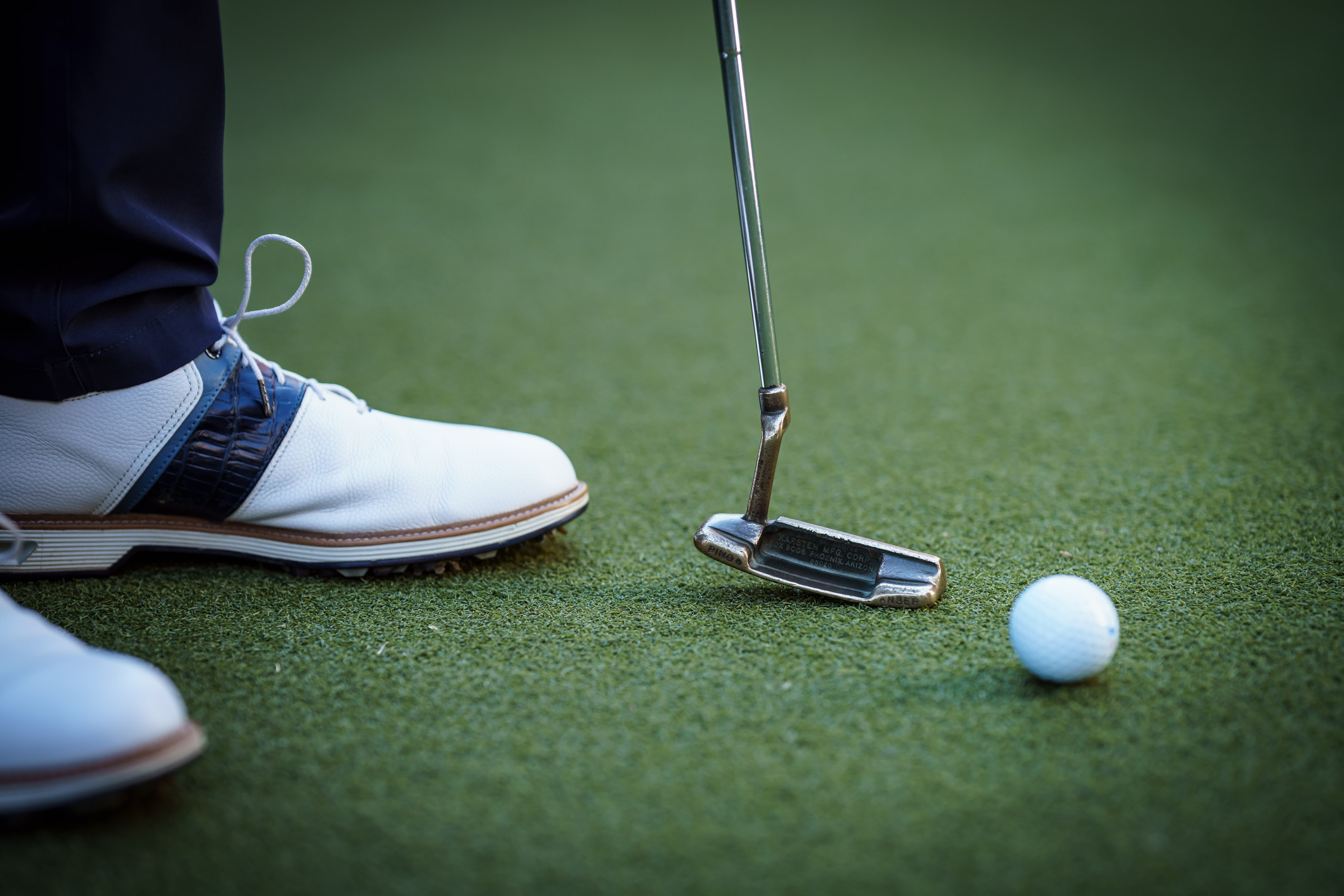
Golf instruction has gotten highly technical. Launch monitors, equipment analytics, swing path data. All of that belongs in the fairway. When you step onto the green, a different set of skills takes over entirely.
This course is about simplifying, not complicating. The goal of every putt is not perfection and not total control of the outcome. It is giving the ball its best chance to go in. Fall in love with that idea, and a lot of things start to change.
Everything in this course fits under one of three pillars. They build on each other. Watch them in order, and by the time you reach the green for your next round, you will have a process that is genuinely yours.
Most golfers read a green while standing over the ball. That is already too late. Green reading starts the moment you step onto the putting surface, and it should shorten your routine, not lengthen it.
There are only a handful of non-negotiable mechanics in putting. The rest is personal choice. Golfers obsess over grip type and putter weight when the real work is much simpler.
A sound read and a solid stroke are not enough without the right approach going into each putt. The routine is what holds it together under pressure.
Stand facing a golfer at address, and you will see an upside-down triangle. Left shoulder at top left. Right shoulder at top right. Toe of the putter at the bottom point.
That triangle is the engine. When the shoulders rock it back and forth, everything else follows. Hands stay in their proper relationship. Wrists stay quiet. The putter swings freely. Pushes and pulls almost always come from the hands getting out of sync with the triangle, not from anything complicated.
Rock the triangle. Everything else follows.
Most instruction tells golfers to take the putter straight back and straight through. That feels logical. But it fights the natural physics of standing beside the ball.
The putter naturally arcs slightly inside on the backswing, squares at impact, then arcs back inside on the follow through. That arc is not wrong. Fighting it is what causes the inconsistency. Once you understand it and stop fighting it, something clicks. The stroke becomes freer. The results get better.
How pronounced your arc is depends on your height, your putter length, and how far you stand from the ball. Rocking the triangle properly self-regulates it. You do not have to manufacture it.
The rule
Stand further from the ball, more arc. Stand closer, flatter arc. Either is fine. Work with your natural position instead of against it.
This is the most overlooked skill in putting, and it is the one that gives you the biggest advantage over the golfers you play with. Not because it is complicated, but because almost nobody does it.
Read the land from a distance
Is there a natural body of water nearby? The entire course can tilt toward it. Look for drains beside the green. Where water goes is where your putt breaks.
Assess while you walk, not while you stand
Your read should be mostly complete before you ever mark your ball. Done right, this shortens your routine on the course. You are gathering information on the move.
Find the apex of the putt
Every putt has a point where the ball runs out of the speed you gave it and gravity takes over. That is the apex. Everything before that point is your job. Everything after it is physics.
Locate the real front of the hole
On a breaking putt, the front of the hole shifts. Where the ball needs to arrive to fall in is not always directly in front of you. Reading this correctly changes which line you choose and how hard you roll it.
Over the years, golfer after golfer asked me to help them with their putting. Playing partners. Club members. Friends of friends who heard I could help. They kept asking, and I kept helping informally, the way you do when you play with people for decades and you pick up things that work.
I am not a tour pro. I am a 2 handicap who played collegiately and has spent over 40 years figuring out what actually works for real golfers. Not perfect conditions. Not perfect strokes. Real greens with footprints and moisture and uneven surfaces. Eventually I decided to document what I had been teaching informally. That is this course.
"I'm not selling you a tour pro's method. I'm sharing what actually works for real golfers who want to score better and stop dreading the putting green."
Wade Kerzie, Creator of Putting Is Simple
Here is something that surprises most golfers. The best putting stroke is not manufactured. It emerges from the right process. When the read is solid, the setup is correct, and the mindset is where it should be, the stroke takes care of itself. It becomes freer, more natural, more consistent.
Fall in love with the process, not the outcome
You can execute 99% of the process correctly and the putt still does not fall. Footprints, soft greens after maintenance, an imperfect cup edge. Those are variables you cannot control. Your process is what you own.
The trigger: last look and go
The final look at your target before the stroke is called the trigger. Look back at the ball and go. The longer you stare at the ball without going, the more your brain forgets where it was supposed to send it.
Your framework, your fingerprint
Not every part of this will fit every golfer the same way. Take what works. Make it yours. What you will have by the end is a genuine system for approaching every green, every putt, in every situation.
"I have watched golfers go from chronic three-putters to players who genuinely look forward to getting on the green. When you stop fighting the mechanics, start reading greens with intention, and go into every putt with the goal of giving it a chance rather than forcing it, something shifts."
Wade Kerzie, Putting Is Simple
If you are serious about lowering your scores and not just hitting it farther, this is where to start. The Spring Special is available now.
Instant access. Watch on any device. Go at your own pace.
Complete Video Course
All modules covering green reading, must-have mechanics, setup, and on-course execution. Watch them in order, or revisit any section any time.
Methodology, Not Just Tips
This is a complete framework, not a collection of disconnected tips. Every concept connects to every other concept. It builds into something you can use on any green.
Filmed at Warrenwood Country Club
Warrenwood Country Club is what a friend named his private outdoor putting green. No valet, no dress code. Real putts, real slope, real conditions — exactly the kind of green you actually play on.